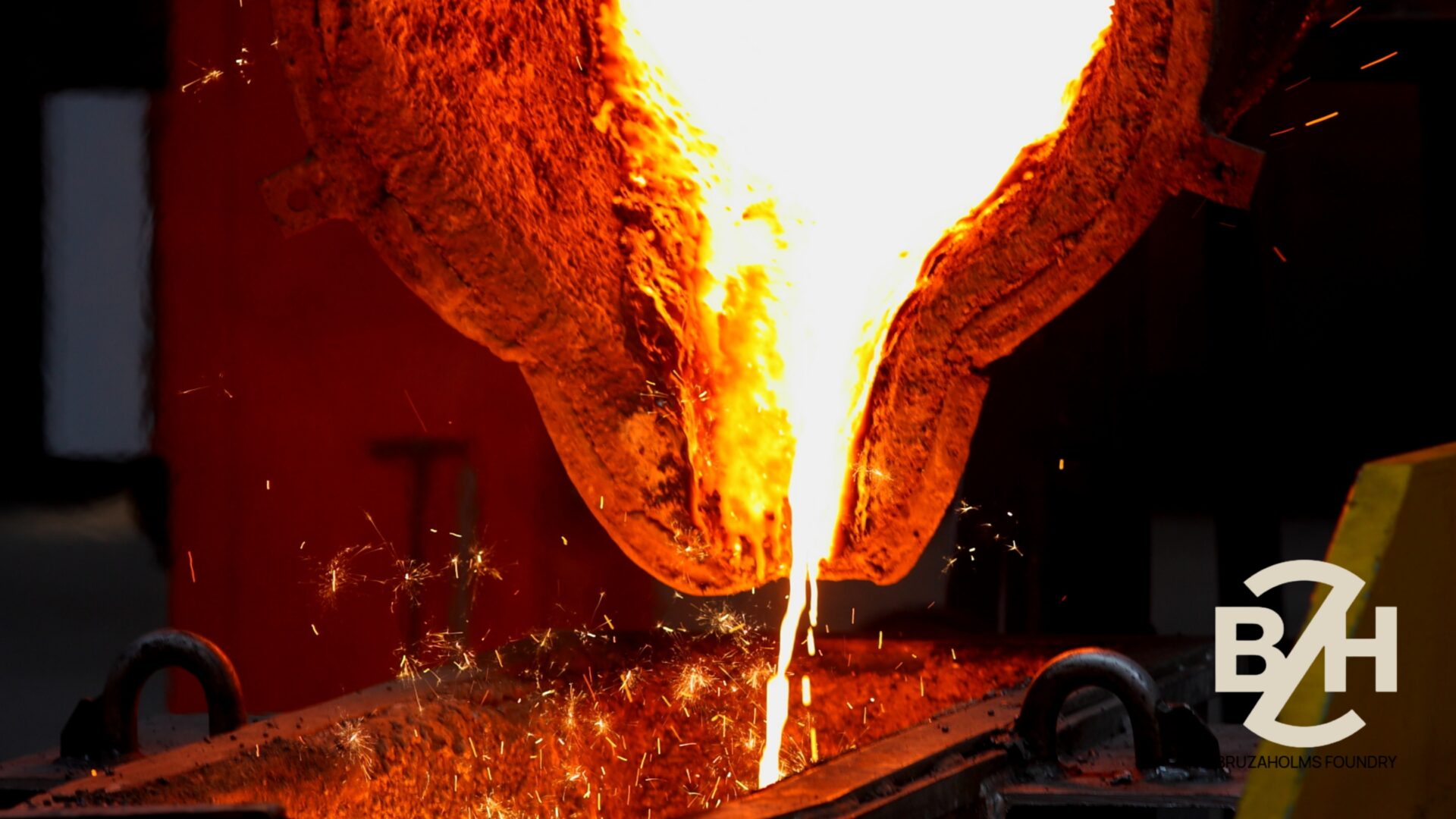
Case Study: Waste Heat Recovery at Bruzaholms Foundry
Overview
In spring 2025, Bruzaholms Foundry — one of Sweden’s oldest and leading manufacturers of wear- and heat-resistant castings — began a new energy initiative to recover waste heat from its production process. The project aimed to reduce energy consumption and fossil CO₂ emissions by capturing heat from a dusty, particle-laden airstream where conventional heat recovery systems had previously failed.
The Challenge
Foundry processes, especially sand cooling and sand reclamation, generate hot airflows that are rich in moisture, binders and particles. Conventional heat exchangers at this facility clogged quickly, requiring weekly maintenance and frequent removal. This made heat recovery uneconomical and impractical — despite significant thermal energy being lost to the environment.
Solution: Lepido by Enjay
To solve this, Bruzaholms installed Lepido, Enjay’s patented heat exchanger specifically engineered for polluted exhaust air — with a coil-based, fin-less design that allows particles to pass through without clogging or performance decay. The recovered heat can be used to pre-heat air or water for space or process heating.
The Lepido unit was installed in the duct serving the sand reclamation system, handling an airflow of ~4 m³/s at ~30 °C.
Measured Impact
1. Major Heat Recovery and Emissions Reduction
- Lepido has enabled recovery of approximately 150,000 kWh of heat annually, covering about 85 % of the facility’s heating demand previously provided by an oil-fired boiler.
- Each recovered kilowatt saved reduces fossil CO₂ emissions by an estimated 750 g per kWh, translating to roughly 90 tons of CO₂ avoided per year.
This represents a significant operational and environmental win at an industrial facility with previously untapped waste heat potential.
2. Reliable Performance in Harsh Conditions
One of the key questions for the project was whether Lepido could operate continuously in a harsh environment that had defeated other heat exchangers.
After three months of operation (February–April 2025):
- No cleaning or maintenance of the heat exchanger was needed.
- Inspections confirmed a stable pressure drop across the system, demonstrating robust, clog-free performancePhotos taken after ~4 weeks and ~12 weeks show an unchanged internal state, reflecting Lepido’s resilience to dust, particles and humidity — conditions that would cripple standard solutions.
Operational Feedback
“Enjay, through Lepido, has enabled us to recover waste heat from our sand preparation process. Unlike previous systems, it can handle the dusty and humid air over extended periods, which has led to significant energy savings and a substantial reduction in maintenance. We have not yet run it through a full annual cycle, but the results so far are very promising.”
— Mats Ekegren, Technical Director, Bruzaholms Foundry
This testimonial underscores the system’s long-term operational reliability and growing confidence from on-site technical leadership.
Conclusion
The Bruzaholms project shows how industrial waste heat — even from highly contaminated airstreams historically regarded as unrecoverable — can be transformed into usable energy that reduces both energy costs and carbon emissions.
Key outcomes:
- ~150,000 kWh/year recovered heat
- ~90 tons of fossil-CO₂ reduced annually
- ~85 % of the site’s heating demand satisfied
- Zero maintenance required during the monitored period
- Demonstrated resilience in a demanding industrial environment
This case reinforces the commercial viability of energy recovery from contaminated exhaust air and highlights Lepido’s potential to unlock similar savings across other industrial facilities globally.
