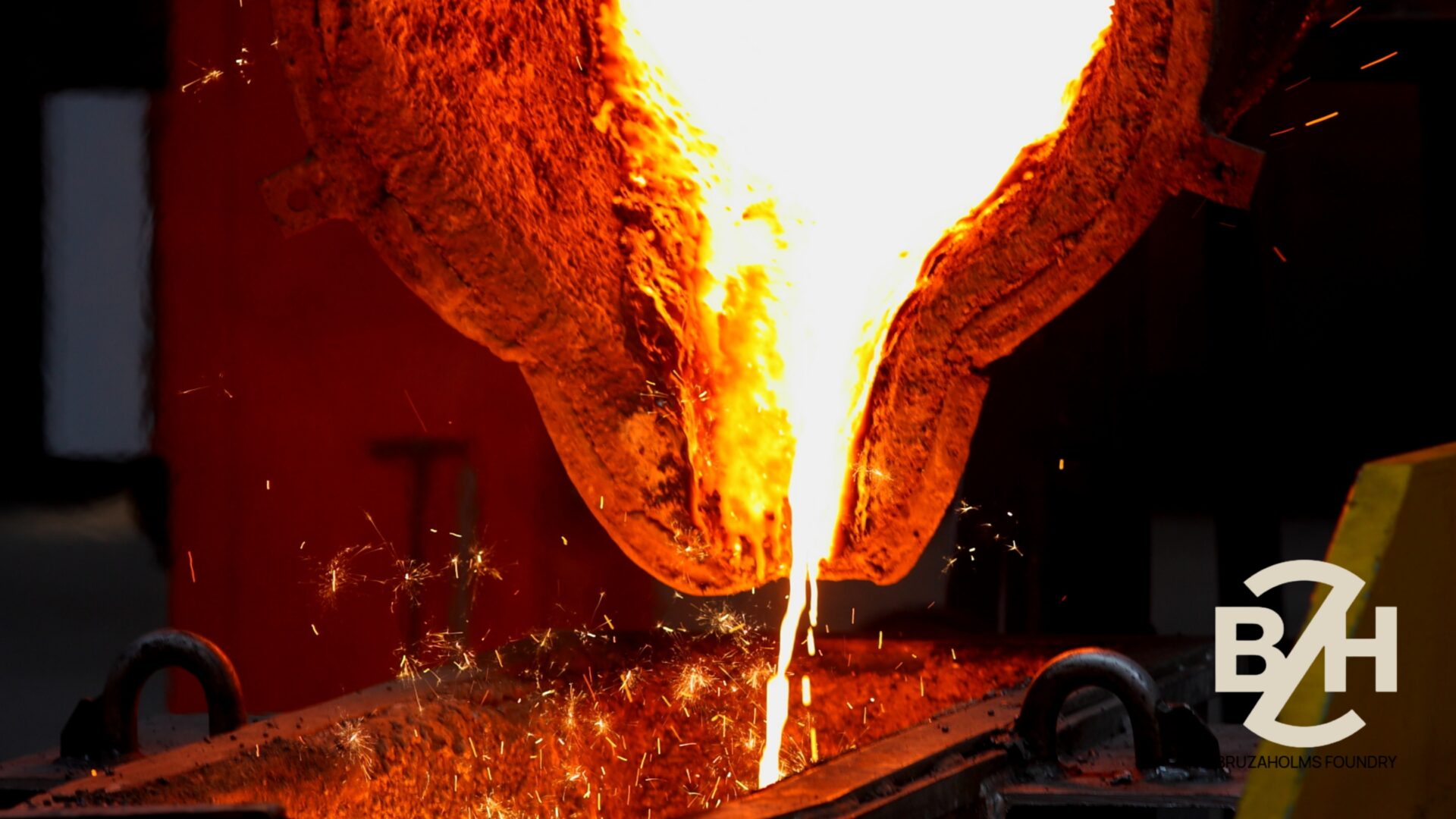
Case Study: Waste Heat Recovery at Bruzaholms Foundry
Recovering Waste Heat from Foundry Exhaust Air
Overview
In early 2025, Bruzaholms Foundry — one of Sweden’s oldest and leading manufacturers of wear- and heat-resistant castings — began a new energy initiative to recover waste heat from its production process.
The project aimed to reduce energy consumption and fossil CO₂ emissions by capturing heat from a dusty, particle-laden airstream where conventional heat recovery systems had previously failed.
Download full case report here: Bruzaholms Foundry
The Challenge
Foundry processes, particularly sand cooling and sand reclamation, generate warm exhaust air containing moisture, binders and particles.
Previous heat exchangers installed at the facility clogged quickly, requiring weekly cleaning and frequent removal. This made heat recovery both impractical and uneconomical — despite significant amounts of thermal energy being lost to the environment.
The Solution: Lepido by Enjay
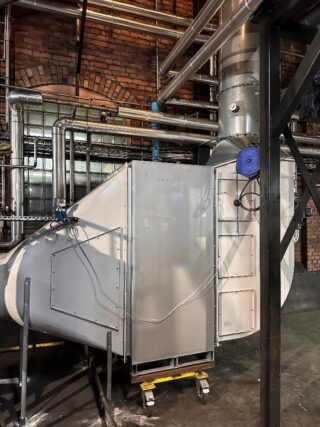
Bruzaholms installed Lepido, Enjay’s patented heat exchanger developed specifically for contaminated industrial exhaust air.
Its finless, coil-based design allows particles to pass through the heat exchanger without causing the rapid clogging and performance loss associated with conventional solutions. The recovered heat can then be used to pre-heat air or water for space or process heating.
The Lepido unit was installed in the duct serving the sand reclamation system, handling an airflow of approximately 4 m³/s at around 30°C.
Measured Impact:
1. Significant Heat Recovery and Emissions Reduction
Lepido enables Bruzaholms to recover approximately 150,000 kWh of heat annually. This covers around 85% of the facility’s heating demand previously supplied by an oil-fired boiler. According to the project calculations, the recovered energy reduces fossil CO₂ emissions by approximately 90 tonnes per year.
This represents a significant operational and environmental improvement at an industrial facility where the available waste heat had previously been considered too difficult to recover.
2. Reliable Performance in Harsh Conditions
A central question was whether Lepido could operate continuously in an environment where previous heat exchangers had required weekly cleaning. Bruzaholms carried out regular inspections throughout the first 14 months of operation. The condition of the heat exchanger was documented with photographs after four weeks, 12 weeks and 14 months. During this period, it continued to deliver good output without requiring cleaning.
Based on these results, Bruzaholms has determined that an annual cleaning interval will be sufficient. This represents a substantial reduction in maintenance compared with the previously installed solutions.
Performance Over Time
The three photographs document how Lepido has performed during extended exposure to dusty and humid foundry exhaust air.
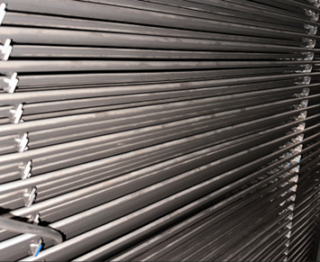
[AFTER 4 WEEKS OF OPERATION]
The condition of the heat exchanger after four weeks of continuous operation.
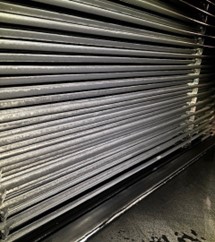
[IMAGE 2 – AFTER 12 WEEKS OF OPERATION]
After 12 weeks, the heat exchanger remained in operation without requiring cleaning.
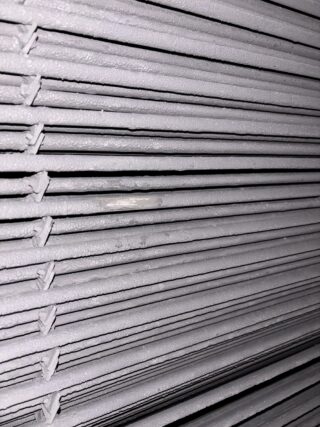
[IMAGE 3 – AFTER 14 MONTHS OF OPERATION]
The heat exchanger after 14 months of operation without cleaning. During this period, it continued to deliver good output, including throughout the winter.
Operational Feedback
“The heat exchanger delivered good output throughout the winter. After 14 months in operation without cleaning, we have concluded that an annual cleaning interval will be sufficient. When we build new facilities in the future, we will definitely consider additional heat exchangers from Enjay.”
— Mats Ekegren, Technical Director, Bruzaholms Foundry
Conclusion
The Bruzaholms project demonstrates that industrial waste heat can be recovered reliably even from highly contaminated airstreams historically regarded as unsuitable for conventional heat exchangers.
After 14 months of documented operation, Lepido has continued to deliver recovered heat without requiring cleaning. Bruzaholms can therefore move forward with a predictable annual maintenance interval while achieving substantial energy and emissions savings.
Key Outcomes:
- Approximately 150,000 kWh of recovered heat per year
- Approximately 90 tonnes of fossil CO₂ emissions avoided annually
- Around 85% of the facility’s heating demand covered
- 14 months of operation without cleaning
- An annual cleaning interval considered sufficient
- Proven performance in dusty, humid and particle-laden foundry exhaust air
- Bruzaholms intends to consider additional Enjay heat exchangers in future construction projects
- The project provides strong evidence that Lepido can unlock waste heat from demanding industrial environments where conventional heat recovery solutions have previously failed.
