Turning Waste Heat into a Competitive Advantage in Food Drying Processes
Turning Waste Heat into a Competitive Advantage in Food Drying Processes
Food production is energy intensive, especially in processes where moisture needs to be removed.
Across the industry, large volumes of hot air are continuously used to dry products such as breakfast cereals, pet food, pasta, coffee, tea, dairy powders and a wide range of ingredients including starch, grains and proteins.
In most cases, this energy is simply ventilated out of the process.
Not because it lacks value, but because it has historically been difficult to recover.
________________________________________
The Untapped Energy Source in Your Drying Process
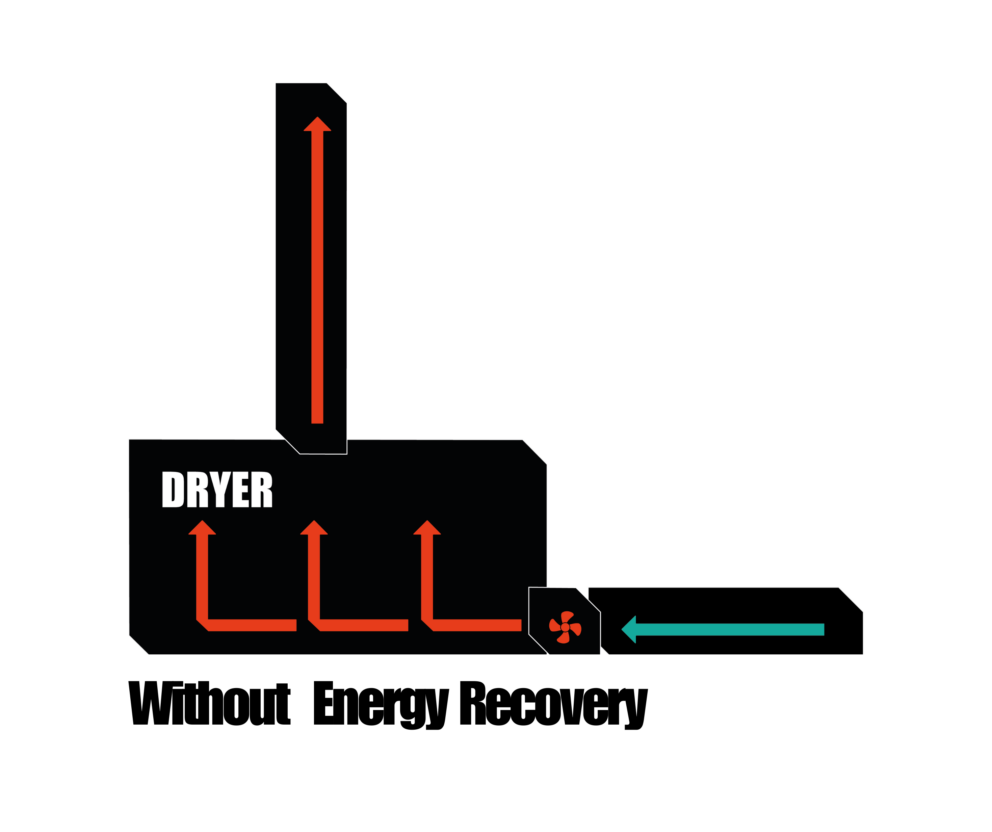
In conveyor and flat bed dryers, large volumes of heated air pass through the product to remove moisture.
After doing its job, this air leaves the process as contaminated industrial exhaust air. It is hot, humid and carries particles, grease or residues.
This is where most conventional heat recovery technologies struggle.
Filters clog. Heat exchangers foul. Performance declines.
So the energy continues to be wasted.
________________________________________
A Technology Designed for Contaminated Industrial Exhaust Air
Enjay’s patented heat exchanger is specifically developed to operate in contaminated industrial exhaust air.
No pre-filters are required. There is no clogging. Performance remains stable over time.
The design allows air and particles to pass through without sticking to the heat transfer surfaces, enabling reliable and long-term energy recovery even in demanding environments.
This is proven in more than 200 installations across industries such as food production, industrial laundries, foundries and commercial kitchens.
To create further operational contingency, every installation is equipped with a built-in bypass function. This allows the airflow to be redirected instantly if needed, eliminating any risk of disruption to the production process. The system is designed to support production, not interfere with it.
________________________________________
15% Less Energy Where It Matters Most
For dryer applications, the opportunity is straightforward.
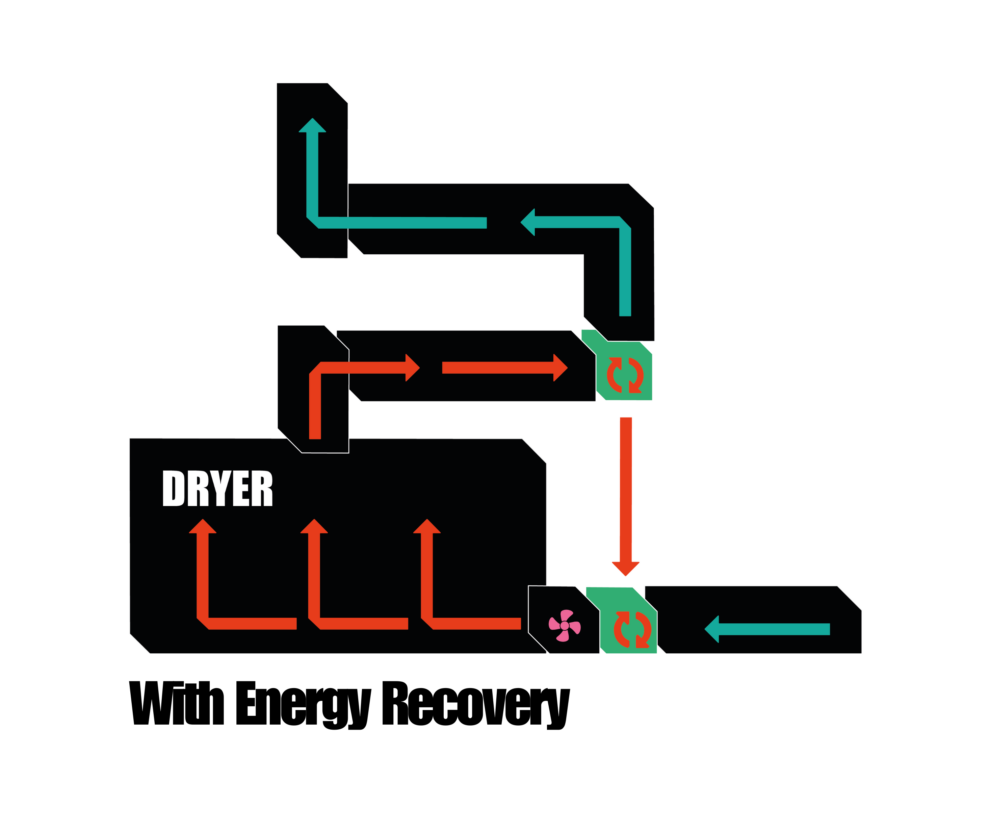
Heat is recovered from the exhaust air leaving the process and used to preheat the incoming air.
This reduces the need for primary energy input.
This approach reduces the total energy demand of the drying process by approximately 15 percent.
Since drying is often one of the most energy-intensive steps in food production, the impact is significant.
Lower energy costs. Reduced fuel consumption. Direct reduction of Scope 1 emissions.
________________________________________
Avoiding CAPEX
By recovering energy that is already being generated in your process, waste heat is transformed into a valuable energy source.
We call it Waste Heat Power.
It is fossil-free. It is available on-site. And it is significantly cheaper than newly produced energy.
With Enjay’s Energy-as-a-Service offering, the barrier of capital investment is removed.
Instead of investing in equipment, you purchase the recovered energy.
There is no upfront investment. No operational risk. No maintenance responsibility.
The result is access to energy at approximately half the cost of newly produced energy.
________________________________________
Why Many Have Tried and Failed
Skepticism is understandable.
Many food producers have tested heat recovery solutions in drying processes before, only to experience declining performance due to fouling and contamination.
The difference lies in the design.
Traditional systems were not developed for contaminated industrial exhaust air.
This one is.
________________________________________
From Energy Efficiency to Energy Strategy
For sustainability leaders, this is a direct lever to reduce Scope 1 emissions.
For technical and production managers, it is a proven way to reduce power demand without compromising process stability.
For the business, it is an opportunity to reduce costs, lower emissions and avoid capital expenditure at the same time.
________________________________________
Stop Venting Value. Start Recovering It.
Every hour, valuable energy leaves your drying process through the exhaust air.
With the right technology and the right business model, that loss can be turned into a competitive advantage.
We do not produce energy.
We recover it and deliver it as a service.