Energy recovery in contaminated process ventilation
Looking for ways to reduce energy consumption in industry?
Then you are in the right place.
Large amounts of energy are lost every day through industrial process ventilation and contaminated industrial exhaust air. In many industries, this wasted energy can be recovered and reused directly in production — reducing both energy costs and emissions.
Why Traditional Heat Recovery Fails in Food Production — and Why Enjay Works
In food production, energy costs are rising, sustainability targets are tightening, and pressure on operational efficiency has never been greater. At the same time, large amounts of valuable thermal energy are still being vented out of production facilities every single day.
The reason is simple: most industrial exhaust air is too contaminated for traditional heat recovery systems to handle.
For plant managers, this creates a frustrating reality. The energy is there. The business case is often obvious. But conventional technology simply cannot survive in harsh process environments for long enough to deliver reliable results.
That is exactly the problem Enjay was built to solve.
The Hidden Energy Source in Food Production
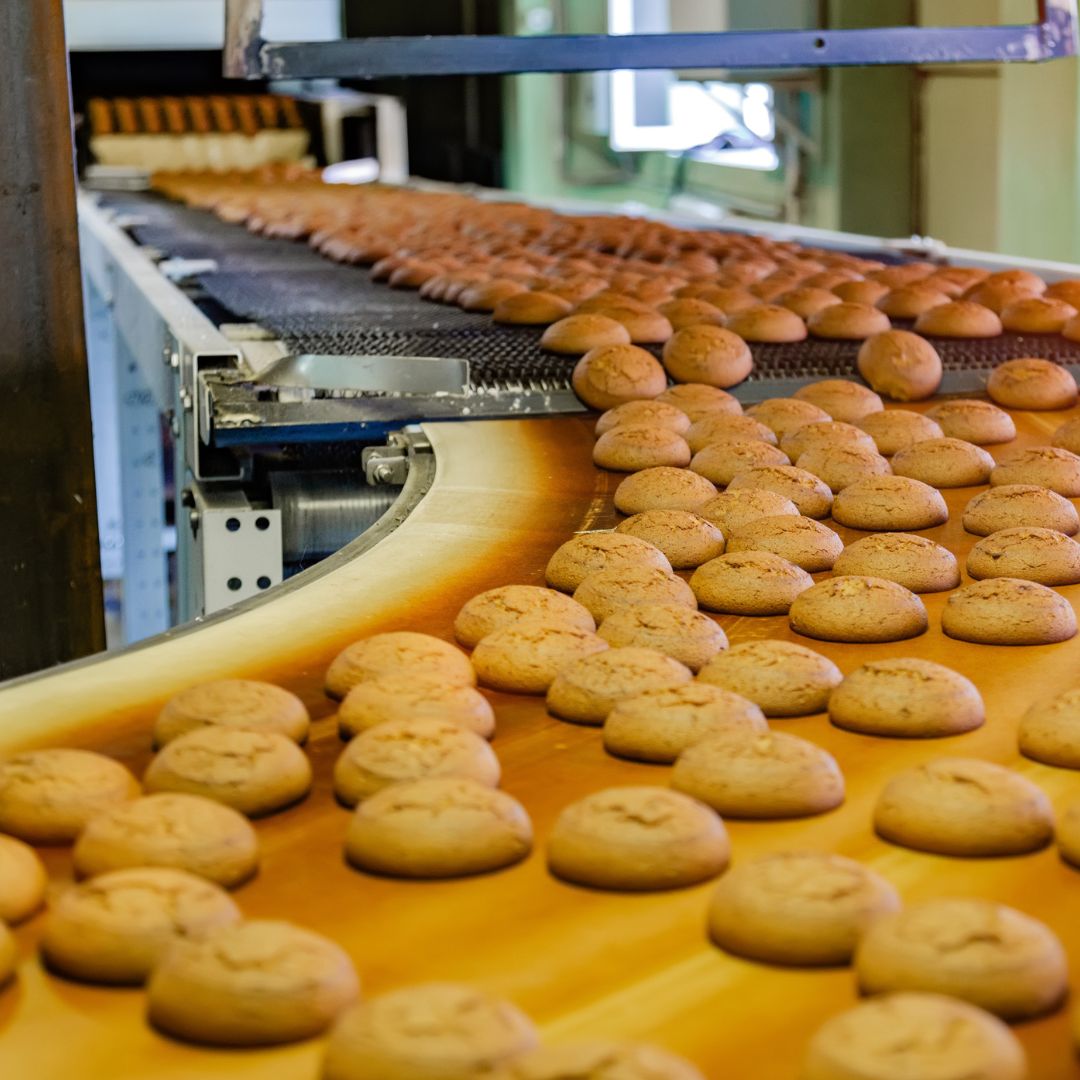
Many food manufacturing processes generate warm exhaust air that contains significant amounts of recoverable energy. This is especially true in facilities using:
- Conveyor dryers
- Flat bed dryers
- Fryers
- Roasting processes
- Ovens
- Cooling tunnels
- Process ventilation systems
The challenge is that this air is rarely clean.
In real production environments, exhaust air often contains:
- Grease
- Sticky particles
- Flour dust
- Sugar residues
- Moisture and condensation
- Soot and airborne contaminants
Traditional plate heat exchangers and rotary systems quickly become clogged in these conditions. Efficiency drops, pressure losses increase, maintenance requirements escalate, and eventually the systems are bypassed or shut down entirely.
For many plant managers, this has created a perception that heat recovery in contaminated industrial exhaust air simply “does not work.”
Why Enjay Is Different
Enjay’s patented technology was specifically developed for contaminated industrial exhaust air.
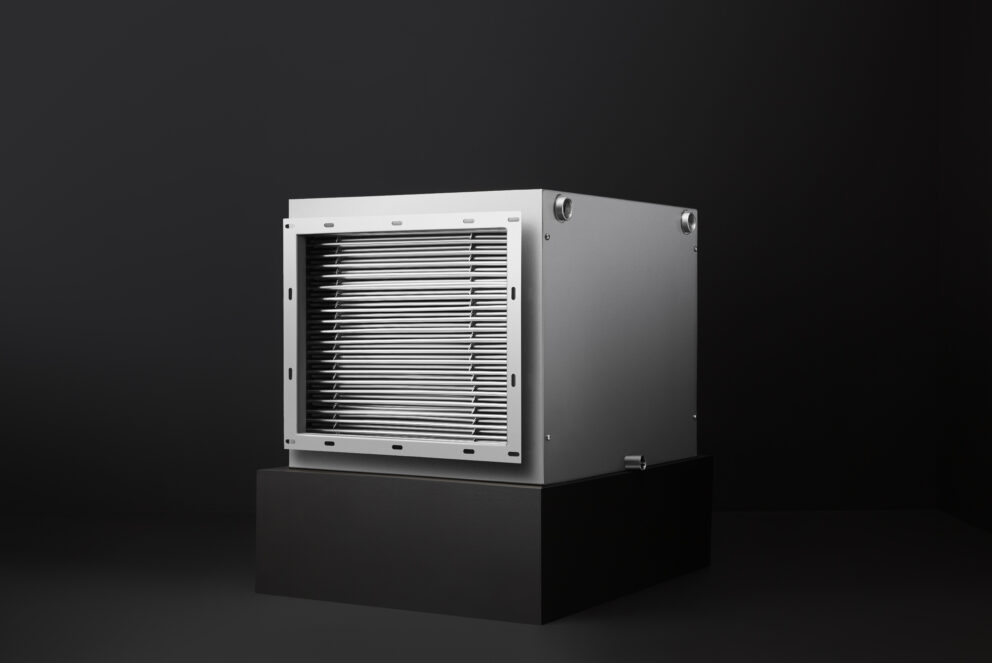
Instead of relying on traditional designs that are highly sensitive to fouling, the system uses a fluid-coupled coil configuration engineered to operate in harsh industrial environments over long periods of time.
The technology is designed to allow particles and contaminants to pass through the system without causing the rapid build-up that typically destroys performance in conventional heat recovery solutions.
This creates several important operational advantages:
- Stable Performance Over Time
- The system is built to maintain heat recovery performance even in environments with high levels of grease, particles and humidity.
- No Need for Complex Prefiltration
- Traditional systems often require expensive filtration systems that themselves create maintenance challenges and pressure drops. Enjay’s technology minimizes this dependency.
- Low Risk to Production
For plant managers, uptime is everything.
Enjay’s systems are designed with operational reliability in mind, including bypass functionality that protects production continuity even during maintenance or service situations.
Proven in Real Industrial Environments
The technology has already been implemented in demanding applications such as:
Food production facilities
Industrial laundries
Fast-food kitchen exhaust systems
Foundries
High-humidity drying processes
One of the most extreme long-term examples has been installed in open-flame grill exhaust air at Burger King in Malmö, where the system operated for extended periods without requiring cleaning despite the highly contaminated environment.
Why This Matters for Plant Managers
For plant managers, energy projects are never just about sustainability.
They must also support:
- Operational reliability
- Production uptime
- Predictable maintenance
- Lower operating costs
- Reduced exposure to volatile energy prices
That is why many traditional energy recovery projects struggle internally. If the system risks creating operational issues, production teams will understandably prioritize reliability over energy savings.
Enjay’s approach changes that equation.
By enabling stable heat recovery in contaminated industrial exhaust air, food producers can recover energy that was previously considered impossible to utilize.
This can significantly reduce:
- Gas consumption
- Purchased heating energy
- Overall energy intensity per produced unit
At the same time, it helps companies move toward Scope 1 emission reductions using energy that already exists inside their own facilities.
Turning Waste Heat Into a Competitive Advantage
Food manufacturers are under growing pressure to reduce both emissions and production costs simultaneously.
The most attractive energy is often not newly produced energy — but the energy already being wasted inside the factory.
Recovering this energy directly at the source creates several advantages:
- 100% fossil-free recovered energy
- No transmission losses
- No dependence on external infrastructure
- Immediate impact on operating costs
- Improved sustainability performance
Most importantly, it allows plants to unlock value from an energy source they already own.
A Practical Approach to Industrial Sustainability
Plant managers do not need theoretical sustainability solutions.
They need technologies that function in real production environments.
That means systems must tolerate contamination, handle demanding operating conditions, and continue delivering value without compromising uptime.
That is precisely why Enjay’s technology was developed.
Not for laboratory conditions.
For real industrial exhaust air.